Researcher Behind CONNECT Engagement Platform Named Finalist for 2026John Hopper Impact Award

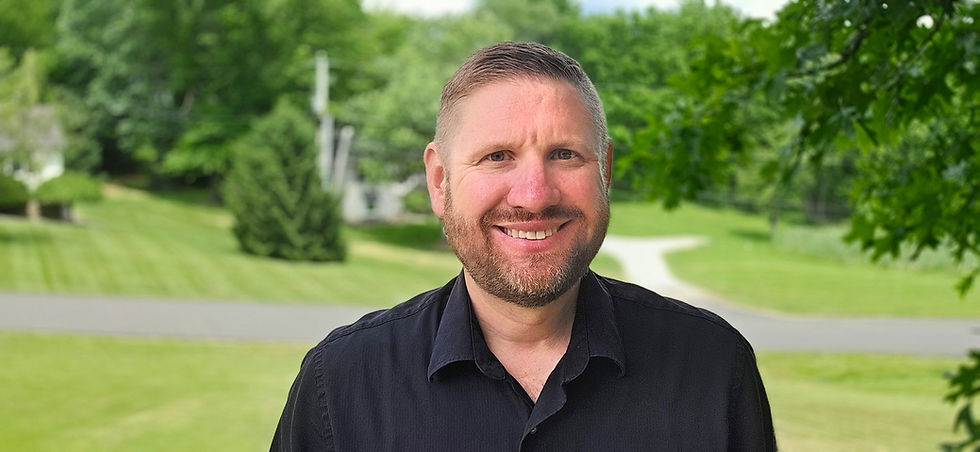
Michael Skrajner, Director of Research and Innovation at Hopeful Aging LLC, has been named one of three finalists for the 2026 John Hopper Impact Award. The award recognizes entrepreneurs advancing the field of empowered care, and the winner will be announced on June 17 at the What's Next Longevity Venture Summit at the University of California, Berkeley.
Skrajner is being recognized for his leadership on CONNECT, a clinically validated
digital engagement platform for individuals living with dementia, grounded in more than
25 years of National Institutes of Health (NIH)-funded research and field testing. The
platform uses auto-sync technology, visual cues, and task breakdown to support people
living with dementia in facilitating group activities for their peers.
“It’s called CONNECT because our activities are really focused on helping people with
dementia make true connections,” he said. “We know that loneliness is a huge issue in
long-term care, so even though they’re often living in a community with lots of other
people, they are not really connecting.”
In addition to his role as Research Scientist and Director of Research and Innovation at
Hopeful Aging, Skrajner serves as Program Evaluation and Research Advisor to the I'm
Still Here Foundation (ISHF). A nonprofit founded by Dr. John Zeisel, ISHF helps
communities implement research-informed, non-pharmacologic engagement programs
so people living with dementia can experience connection, dignity, and hope.
ISHF works in close partnership with Hopeful Aging LLC, an NIH-funded organization
and leader in the non-pharmacologic dementia research field, also founded by Dr.
Zeisel. “I see my role [at ISHF] as vital for change because changing dementia care
also requires changing the public narrative,” said Skrajner.
“If people see only decline, they expect less, invest less, and offer fewer opportunities,”
he continued. “When they see possibility, dignity, and humanity, however, they begin to
support the kinds of care that help people feel and live better today.”
This is the kind of narrative that informs ISHF’s work, which is national in scope. “Our
grantees are located across the United States,” noted ISHF Executive Director Sharon
Johnson. “Our message of ‘Hope in Action’ is central to our work.
According to Skrajner, who has worked in the field for 24 years and previously
collaborated with the Mayo Clinic, the Benjamin Rose Institute on Aging, and the Salk
Institute, what the field most needs now is hope. “Not denial or false hope, but realistic
hope,” he said. “Hope matters not because it changes the diagnosis, but because it
changes the experience of living with it.”
Founded in 1995, nonprofit ISHF helps communities implement research-informed, non-
pharmacologic engagement programs so that people living with dementia can
experience connection, dignity, and hope. To learn more, visit imstillhere.org.


Comments